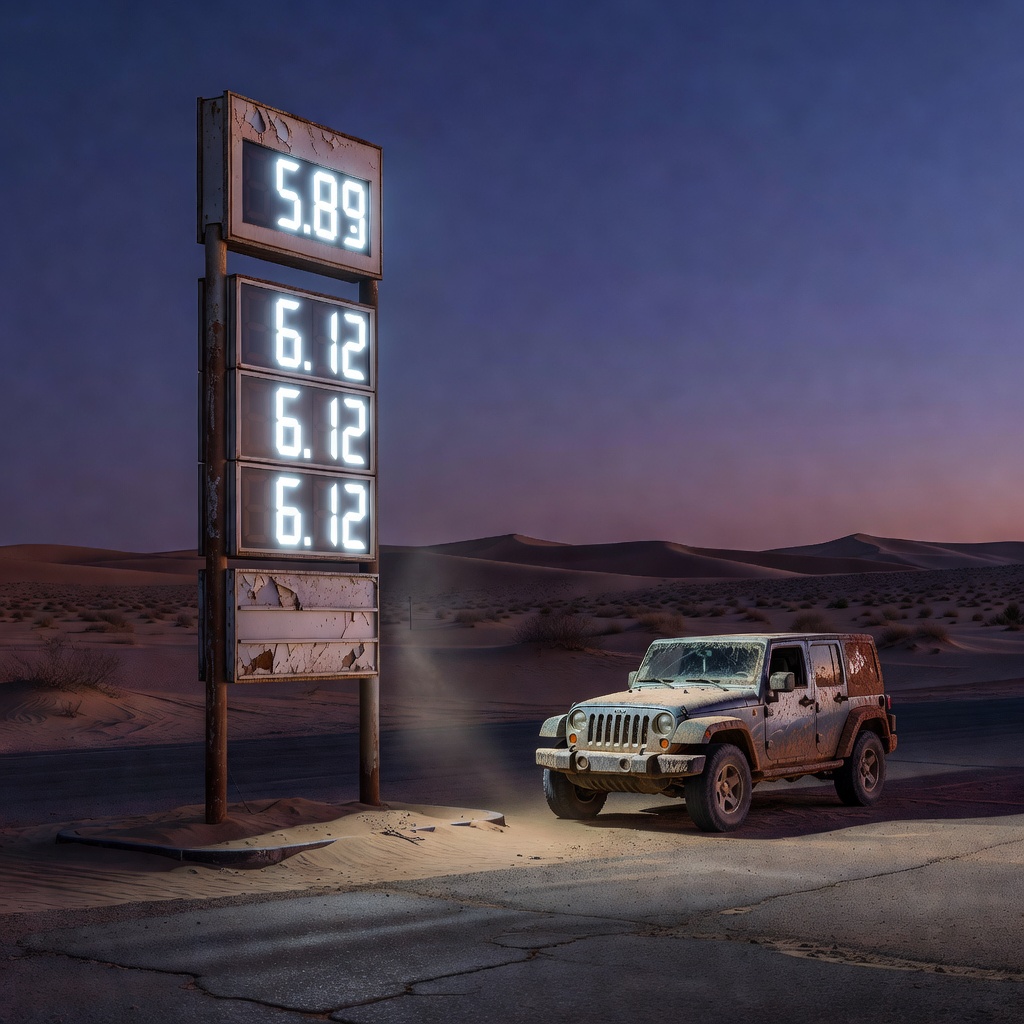
Expensive Fuel, Hard Trails and the Chinese Electric Rescue
I grew up wrenching on V8s in Detroit, and I've spent my whole career trying to convince people that electrification isn't the enemy of off-roading — it might be its best friend since the transfer case. After the last few months, I might finally have the fuel prices on my side.
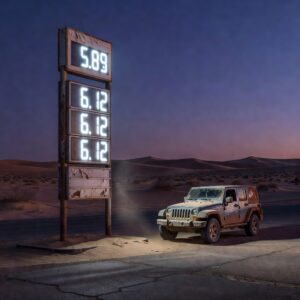
You don't need me to tell you what a tank of gas costs these days. The US national average was hovering around $4.55 a gallon in late May, up roughly a dollar and a half from where it sat before the US and Israel launched their campaign against Iran in late February. J.P. Morgan analysts warned that a sustained Strait of Hormuz closure could push pump prices past five dollars. Yale Climate Connections ran the math on seven-dollar gasoline if the strait stays pinched through June. In Europe the pain is structural: the EU weekly average sits around €1.83 a litre for petrol and €1.92 for diesel. For anyone who actually goes off-road — where thirsty V8s and big fuel tanks are the point — this is existential. Even if the war ended tomorrow, refineries and shipping lanes don't snap back.
So here's the question I keep getting from trail riders, expedition builders and overlanding crews: what's the off-road answer when diesel hurts this much? For years the honest answer was "nothing good — you either pay or you park it." That's changing, and the change is shipping out of China.
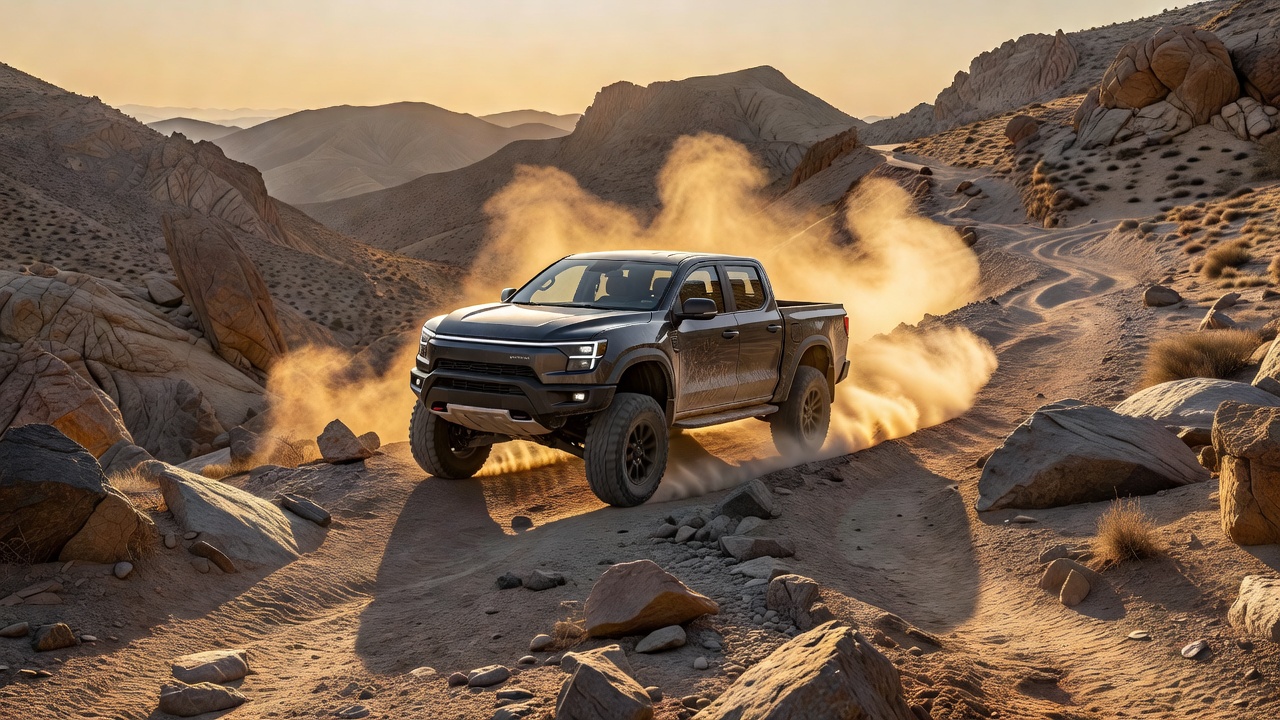
The economics no one wanted to talk about
Let's be blunt about the numbers, because I'm an engineer and I quote specs. A conventional off-road rig lives on one to three litres of fuel for every ten kilometres. On a weekend trail run that's fine. On a month-long expedition through the mountains, or a daily off-road commute that's already expensive, the fuel bill becomes the single biggest line item — bigger than tyres, bigger than maintenance, bigger than the loan.
That's the pain the 2026 Iran war exposed. The Strait of Hormuz carries roughly a fifth of the world's oil. When it wobbles, diesel spikes first because it's the working fuel of trucks, shipping and agriculture. And it's diesel that moves most of the world's 4x4s. Had the strait stayed shut through June the way analysts feared, we weren't looking at a nuisance — we were looking at rationing-level prices in markets from Australia to Poland.
I laid out the wider map of this in my analysis of the economics of the Iran war over at FutureTech World — how oil, gold and the new sanctions geography are redrawing global trade. The short version for off-roaders: fuel isn't getting reliably cheap again, and rich-world governments are not going to subsidise your V8.
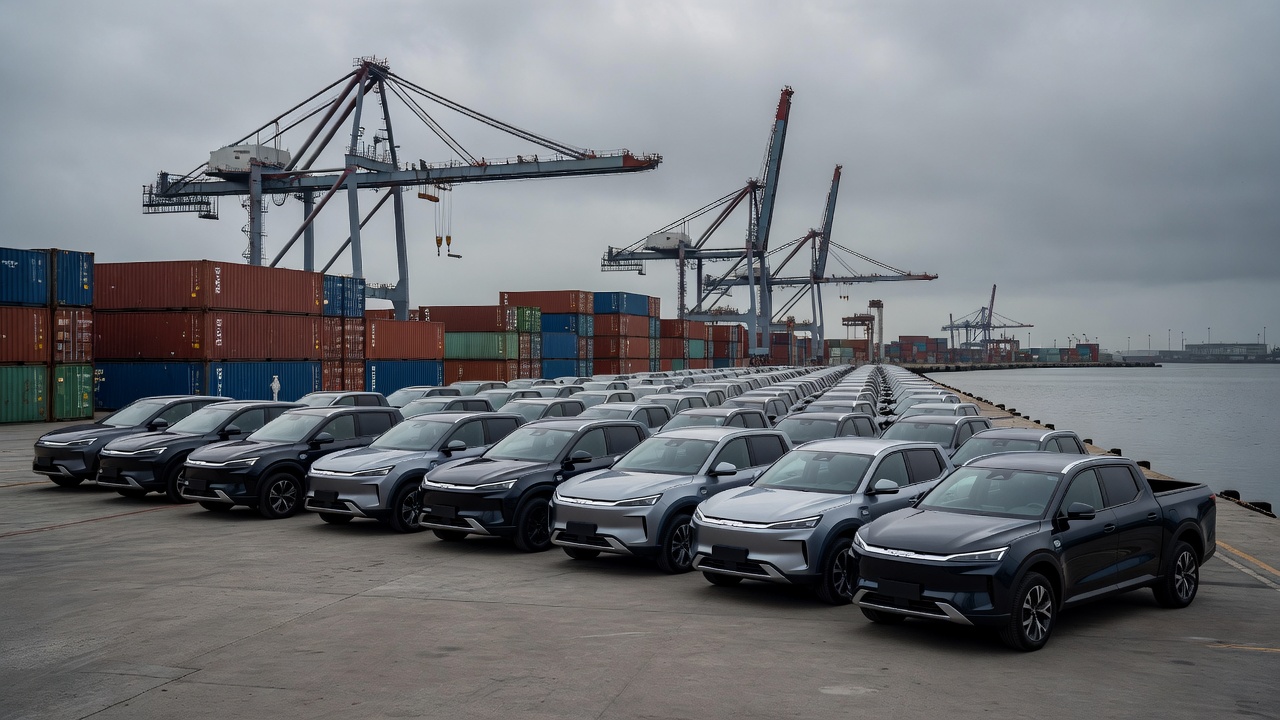
Enter the Chinese answer
For a long time "electric 4×4" was a punchline. The early attempts had the ground clearance of a sport coupe and the range of a golf cart with a headwind. I've driven enough of them to know the first generation didn't deserve your respect. The current generation is a completely different machine, and it's almost entirely coming out of China.
Take the BYD Shark 6. It's a proper mid-size pickup — the "ute" Australians have fallen for — with a plug-in hybrid setup. On battery alone you get around a hundred kilometres of silent electric range for the daily stuff, and the petrol engine kicks in for the long stretches and serious towing. The hybrid fuel figure is startling compared to any comparable diesel ute: we're talking single-digit litres per hundred kilometres in mixed use, not the mid-teens a thirsty diesel pick-up burns. It isn't a niche curiosity anymore; it's a mainstream seller in markets that actually use pickups for work, and Chinese-built cars now dominate the top of the EV sales charts in Australia.
Then there's the GWM Tank 500, which is essentially a luxury Land Cruiser-fighter with a hybrid powertrain. And at the wild end of the spectrum, the Dongfeng M-Hero 917 — a full-size luxury electric off-roader with a thousand-plus horsepower, a four-second 0-100 time despite weighing like a tank, and genuinely serious off-road hardware underneath. It launched in China at around $87,500, and it's a big, serious, capable machine, not an EV mockery of a trail wagon.
And the pipeline is just getting busier. GAC is pushing its Pickup 01 electric ute toward Australia, Saudi Arabia and Chile — precisely the markets where off-road capability and fuel costs bite hardest. These aren't compliance cars built for EU emissions paperwork. They're being engineered for deserts, outback trails and mountain passes, because that's where the money and the customers are.
Why electrification actually works off-road
Here's the part the trail purists get wrong, and I say this as someone who still restores '70s Mustangs in his workshop: electric and hybrid powertrains are structurally great off-road.
Instant, controllable torque is the whole game on slick rocks, mud and steep climbs. A combustion engine needs revs and clutch work; an electric motor gives you precise, flat torque from a standstill. Crawling becomes trivial. Regenerative braking means you descend hills without cooking your brakes the way a heavy rig does. And a hybrid — which is what most of these Chinese off-roaders actually are — gives you the best of both: electric torque and silence for the low-speed stuff, an engine for range and towing.
That matters more than ever when every litre costs this much. City EV range anxiety is real, but for off-roading, hybrid-electric is arguably the sweet spot the entire industry has been fumbling toward — and China got there first because they had to defend domestic sales and then went hunting for export markets with exactly this kind of vehicle.
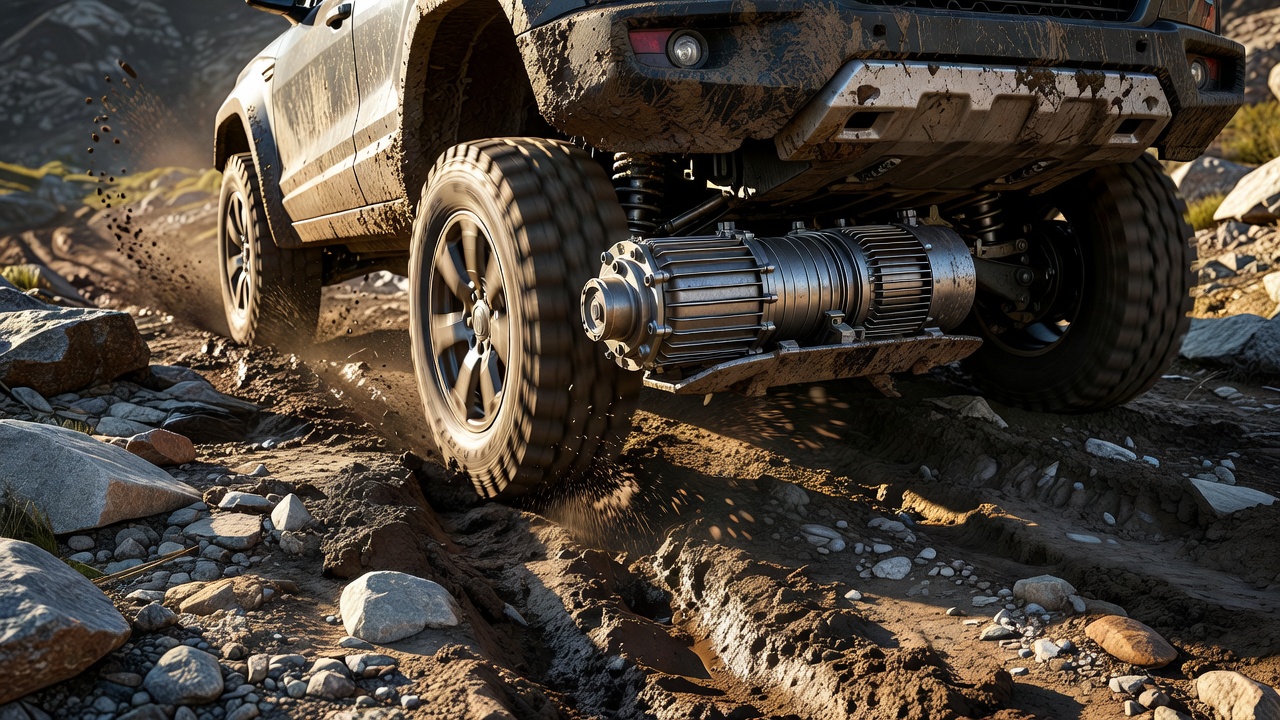
But let’s not romanticise it
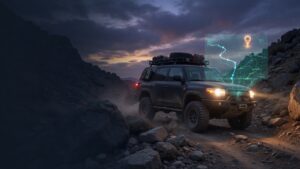
I'm not going to shill. There are real problems. Charging infrastructure in the middle of nowhere is still a joke — a million-dollar electric expedition rig is worthless if the nearest fast charger is four hundred kilometres away through a valley with no cell signal. The M-Hero's range, impressive on paper, still demands planning that a diesel truck never required. Cold weather hurts range. And cheap Chinese imports have sparked tariff battles in the exact markets — Australia, Europe, the US — where these trucks need to sell.
There's also a cultural hurdle I've watched up close. Trail communities are loyal to brands and heritage. A Jeep owner doesn't want to hear that a Chinese hybrid ute from a brand they can't pronounce is objectively better on a rock ledge. But the numbers don't care about brand loyalty, and neither, increasingly, does the fuel bill.
What I’d actually buy
If I had to live with these prices and still wanted to get properly off-road, I'd look at the hybrid pickups first, not the full EVs. The BYD Shark 6 and its ilk give you the magic of electric torque where it counts, without the range panic in the backcountry. The full-electric flagship like the M-Hero 917 is an amazing machine and a statement, but it's a statement for people who can afford a second vehicle and charging infrastructure at home.
My honest hope is that this fuel crisis does what a decade of environmental pleas couldn't: force the off-road world to actually take hybrid-electric seriously. When a tank of gas costs what it costs in 2026, the argument stops being about virtue and becomes about arithmetic. And arithmetic, unlike brand loyalty, always wins.
I'll keep wrenching on my classics — that's not going anywhere. But if you're planning a serious expedition and you haven't at least test-driven a Chinese hybrid 4×4, you're leaving money on the trail. The world's most expensive fuel just met its match.

Reading this with my diesel Land Cruiser idling outside like a thirsty dinosaur that just heard the Strait of Hormuz is a permanent mood, I feel the despair deep in my transfer case, because even a thousand-horsepower M-Hero 917 can’t outrun the arithmetic that my nearest fast charger is 400 km past the last cell tower and my jerrycan is now worth more than my first truck.
Last weekend I watched a hybrid crawl a muddy ledge with instant torque while my old V8 sat there boiling fuel and hope, and a buddy at Holik Studios joked they could gamify my trail budget into a loyalty program, but the only reward I want is a diesel pump that doesn’t require a second mortgage and a BYD Shark 6 that doesn’t need a charger at the edge of the known universe.
So tell me, fellow trail riders, are we supposed to keep pretending this is an electric rescue when the infrastructure is a rumour, the tariffs are a wall, and every fill-up feels like Mad Max with worse upholstery, or do we just admit the V8 dream is now a lawn ornament and ask which hybrid will betray us most comfortably?