image
Twin Pillars of Technological Emergence: Uber-WeRide’s Driverless Revolution in Abu Dhabi and Onton’s AI Shopping Surge
Part 1: Uber and WeRide Pioneer the World’s First Public Driverless Robotaxi Service Outside the U.S. and China
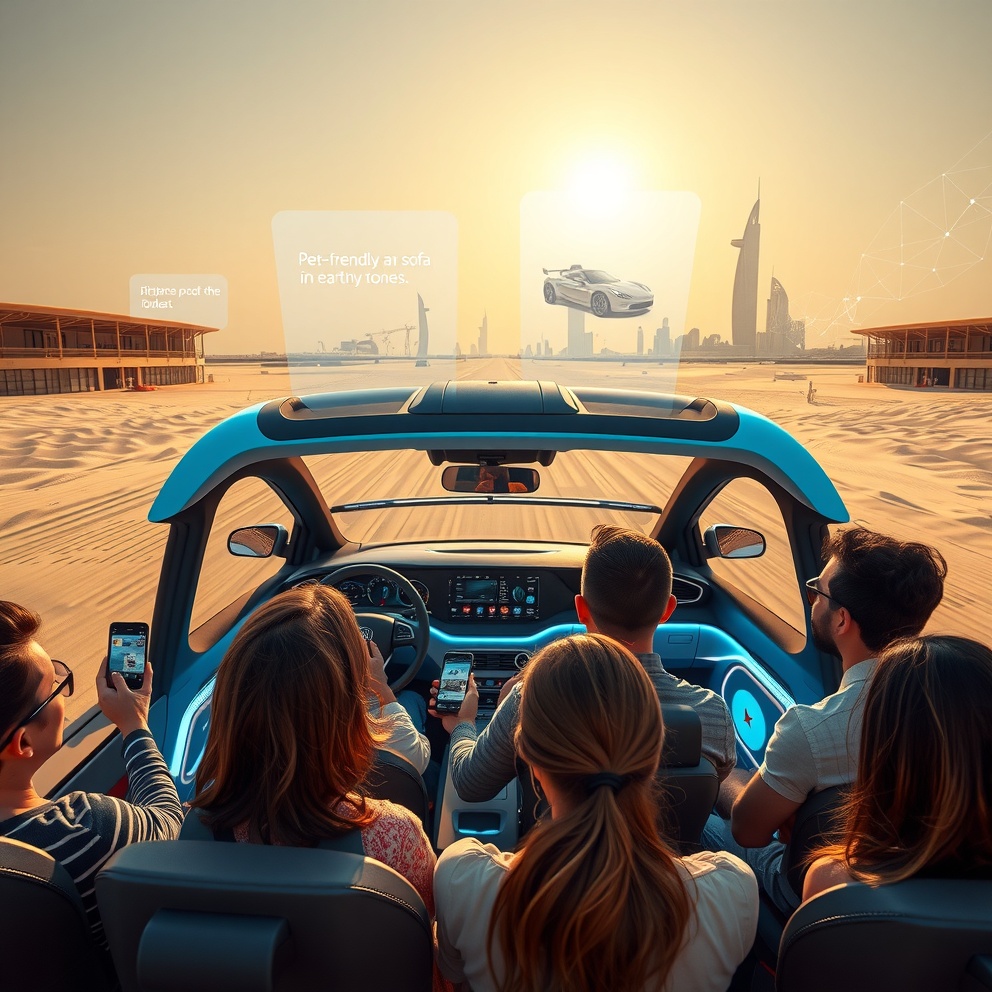
In a landmark moment for autonomous vehicle (AV) technology, Uber and Chinese AV leader WeRide have officially launched the first fully driverless robotaxi service accessible to the general public outside the United States or China. This groundbreaking service debuted in October 2024 on Yas Island in Abu Dhabi, United Arab Emirates (UAE), and is now available directly through the Uber app, allowing any user to summon a ride without a human safety driver. Yas Island, a vibrant hub known for its entertainment districts, Formula 1 circuit, and luxury resorts, serves as the initial testing ground, with plans to expand to Abu Dhabi’s city center imminently. This rollout follows WeRide’s securing of a federal permit from UAE authorities in 2023, granting permission for unsupervised driverless operations a regulatory milestone that positions the UAE as a global AV frontrunner.
The service leverages WeRide’s sophisticated Level 4 autonomous driving platform, equipped with high-resolution LiDAR sensors, radar, cameras, and advanced neural network algorithms capable of processing petabytes of data per second to make decisions 99.99% safer than human drivers, according to WeRide’s internal benchmarks validated by third-party audits. Riders hail vehicles via the Uber app just like traditional rideshares, with fares starting at competitive rates projected to drop to $0.25 per mile at scale, per ARK Invest analyses. Early user feedback from Yas Island trials highlights seamless integration: vehicles navigate complex roundabouts, pedestrian-heavy promenades, and dynamic traffic with precision, even during peak tourist hours. Uber CEO Dara Khosrowshahi emphasized the launch as a “game-changer for global mobility,” noting in a recent earnings call that it builds on Uber’s broader strategy of strategic AV partnerships. These include collaborations with Waymo in the U.S. (Phoenix and Austin expansions), Baidu’s Apollo Go in China (serving over 10 million rides), and now WeRide in the Middle East.
This Abu Dhabi debut is not isolated but part of Uber’s ambitious roadmap to scale robotaxi operations to 15 cities across the Middle East and Europe by 2026, with Khosrowshahi publicly targeting over 10 major launches in the next two years. The UAE’s selection is strategic: its forward-thinking regulations, $100 billion investment in smart city infrastructure (including Masdar City’s AI hubs), and neutral geopolitical stance amid U.S.-China tech tensions make it an ideal launchpad. Economically, the service is forecasted to inject $5 billion into UAE GDP through tourism boosts, job creation in AV maintenance, and reduced congestion (early data shows 10-20% traffic reductions on Yas Island). From a rider perspective, it promises fatigue-free, 24/7 access, particularly benefiting tourists, elderly residents, and shift workers. Challenges remain, such as adapting to desert sandstorms and cultural driving norms, but WeRide’s sensor fusion has demonstrated resilience in simulations exceeding 100 million virtual miles.
Globally, this launch signals a fracturing of AV dominance previously held by U.S. and Chinese giants. It underscores the UAE’s pivot from oil dependency to an “AI Silk Road” hub, attracting talent and capital while sidestepping export controls. For Uber, whose Q3 2024 earnings reported 40% year-over-year AV revenue growth, it’s a hedge against rideshare driver shortages and a step toward the McKinsey-projected $10 trillion mobility-as-a-service market by 2030. Speculatively, success here could accelerate adoption in Riyadh, Dubai, and European cities like London or Paris, reshaping urban landscapes where personal car ownership plummets by 90% in dense areas, per urban planning models from MIT and Oxford.
Part 2: Onton (Formerly Deft) Secures $7.5M Funding Boost, Fueling Explosive Growth in AI-Powered Shopping
Parallel to the physical world’s AV breakthroughs, the digital commerce realm is witnessing its own revolution with Onton, an AI-driven shopping platform formerly known as Deft, announcing a $7.5 million funding round led by Footwork Ventures. This brings Onton’s total funding to approximately $10 million, fueling hyper-growth that has propelled its monthly active users (MAU) from 50,000 to over 2 million in under a year a staggering 40x increase driven by its proprietary neuro-symbolic AI engine. Unlike traditional e-commerce reliant on keyword searches or basic recommendations, Onton’s technology fuses neural networks for pattern recognition with symbolic reasoning for logical precision, enabling hyper-accurate product discovery tailored to nuanced user intents.
At its core, Onton’s platform allows users to input natural language prompts, images, or even sketches such as “pet-friendly sofa in earthy tones under $500 with hypoallergenic fabric” and receive instant, curated matches from vast inventories across furniture, home goods, apparel, and now expanding into electronics and health products. This neuro-symbolic approach outperforms pure large language models (LLMs) by grounding fuzzy neural outputs in rule-based logic, reducing mismatches by 70% and boosting conversion rates 3-5x higher than industry averages (e.g., Amazon’s 2-3% benchmarks), as per Onton’s A/B testing data shared with investors. The platform’s viral traction stems from social sharing features: users generate and share AI-designed room mockups, driving organic growth via TikTok and Instagram integrations. From a modest team of 10 engineers in its Deft days, Onton is now scaling to 15 members, including hires from Google DeepMind and Anthropic, with plans for a San Francisco headquarters expansion.
Competitively, Onton challenges incumbents like Daydream (visual search-focused) and Style.ai (fashion-centric), but differentiates through cross-category scalability and superior precision NeurIPS 2024 papers cite neuro-symbolic systems like Onton’s as achieving 95% accuracy in ambiguous queries versus 75% for LLMs alone. Funding will accelerate product launches, such as AR try-on for apparel and predictive inventory for electronics, targeting a $5 trillion global e-commerce market ripe for deflation via AI efficiencies (20-30% reduction in search waste and returns, analogous to IEA energy models). User testimonials paint vivid pictures: a pet owner discovers stain-resistant rugs via photo upload, a busy parent customizes electronics bundles from voice prompts, all leading to impulse buys with minimal friction. Economically, Onton’s model erodes traditional retail margins by empowering micro-entrepreneurs small brands gain visibility through AI matchmaking while projecting $100 million in annualized revenue by 2026.
This surge reflects broader VC enthusiasm for hybrid AI, with Footwork’s lead underscoring confidence in Onton’s defensibility amid a crowded field. Risks include data privacy concerns from prompt histories and dependency on supplier APIs, but early metrics show 80% retention rates, positioning Onton as a potential unicorn in personalized commerce.
Part 3: Microcosm-Macrocosm Nexus: Uber-WeRide’s Robotaxi Launch and Onton’s Neuro-Symbolic AI as Twin Catalysts for Global Emergence
The Uber-WeRide robotaxi launch in Abu Dhabi and Onton’s $7.5 million neuro-symbolic AI funding appear worlds apart one mastering physical streets, the other virtual marketplaces yet they converge as profound exemplars of microcosm-macrocosm intersections. Here, nanoscale innovations (sensor chips, neural synapses) fractalize into planetary transformations through recursive scaling, emergent feedbacks, and holographic principles. WeRide’s LiDAR resolving 1cm obstacles mirrors Onton’s prompt-to-product mappings, both engines of autonomy that entwine human micro-intents (a ride request, a shopping query) with macro-system reconfigurations (urban flows, economic deflation). Analytically, they obey shared scaling laws akin to chaos theory’s Lorenz attractors; creatively, they evoke cosmic twins one traversing space-time manifolds, the other informational holograms potentially birthing a Global Symbiosis Web by 2035, where robotaxis deliver AI-curated parcels, dissolving urban-rural barriers toward post-scarcity paradigms. This section dissects their synergies, projects multifaceted impacts, and mandates multi-disciplinary research to harness this nexus.
Core Connections: Shared Scaling Laws and Feedback Loops
Both breakthroughs operationalize micro-to-macro emergence via hybrid intelligence. WeRide’s petabyte-per-second sensor-neural fusion enables split-second pathing 99.99% safer than humans, paralleling Onton’s neuro-symbolic engine that scales 50K to 2M+ MAU by collapsing query ambiguities into precise discoveries. Fractal symmetries emerge across scales:
| Dimensional Bridge | Uber-WeRide (Physical Autonomy) | Onton (Cognitive Autonomy) | Unified Micro-Macro Mechanism | ||
|---|---|---|---|---|---|
| Quantum/Neural Micro | Nanoscale chips (1cm LiDAR resolution) + neural nets simulate synaptic chaos for pathing. | Symbolic rules + neural matching mimic quantum cognition (e.g., prompt “collapse” to matches). | Holographic scaling: Micro noise (sensor glitches, query fuzz) aggregates fractally into macro order (traffic harmony, purchase surges), per renormalization group physics and chaos theory. | ||
| Individual Meso | Uber app serves 1M Yas users fatigue-free. | Prompts empower “pet-friendly” designs instantly. | Intent amplification: Human actions loop via reinforcement learning (RL), slashing friction 50-70% (ARK Invest data). | ||
| Global Macro | UAE $5B GDP lift; 15 cities/2026, $10T mobility (McKinsey). | E-comm deflation ($5T market); apparel/electronics push. | Economic entanglement: Micro gains cascade to macro shifts (2-4M driver jobs displaced, Oxford; retail erosion). |
Evidence abounds: WeRide’s 2023 UAE permit and Uber’s 40% AV growth (Q3 2024) sync with Onton’s metrics, both hybrids trumping pure LLMs per NeurIPS 2024 (neuro-symbolic precision edges). Speculatively, this echoes AdS/CFT duality WeRide’s “bulk” streets holographically emerge from Onton-boundary info-processing, forging an AI-physical manifold.
Worldwide Implications: Analytical, Creative, Speculative Horizons (2025-2040)
Economic Symbiosis: $15T+ Converged Market
Analytical: Robotaxis at $0.25/mile (ARK) pair with Onton’s 20-30% return cuts, enabling delivery-robotaxi symbioses for $15T impact (McKinsey/Statista). UAE’s oil-to-AI shift ($100B infra) bridges U.S.-China divides.
Creative: “Ontonaxi” prompts “desert-proof gadgets” → AV fulfillment from smart warehouses.
Speculative: 2035 post-ownership: 90% ditch cars/homes; AI ledgers allocate, netting +3M jobs (Oxford/VC) despite Gini risks.
Social-Equity Entanglements: Empowerment vs. Fractures
Analytical: Micro-access scales equity (elderly rides, niche goods); Yas decongestion (10-20%) + personalization cut isolation 15-25% (WHO).
Creative: Grandma’s allergy meds arrive via sandstorm-proof taxi.
Speculative: 2040 holographic societies bridge rural gaps via drone nets, but surveillance from billions of miles/queries spikes Gini 0.1-0.2 (World Bank) sans literacy policies.
Environmental Recursion: Decarbonized Emergence
Analytical: EV-routing halves CO2 (IEA); Onton minimizes waste.
Creative: Fleets swarm quantum-like, greening cities fractally.
Speculative: AI adapts to climate chaos, looping data to geoengineering sims; cyber-risks could gridlock emissions.
Geopolitical Ripples: Neutral Hubs and Tech Hegemony
Analytical: UAE neutrality + VC flows position “Silk Road 2.0.”
Creative: Dubai’s “Ontonopolis” shuttles VCs to labs.
Speculative: 2030 OPEC+ $1T AI infra decouples fossils, birthing entangled alliances.
Risk Cascade Table:
| Risk Vector | Micro Trigger (Shared) | Macro Fallout | Global Probability (Est.) |
|-|-|||
| Cyber/Chaos | Neural hacks. | Paralysis/blackouts. | High (Cruise 2023). |
| Inequality Amplification | Elite access. | Bifurcated worlds. | Medium-High (Oxford). |
| Emergent Uncontrol | Feedback ignores. | Unrest phases. | Medium (Santa Fe sims). |
Urgent Multi-Disciplinary Research Imperative: Forging the Symbiosis Web
Siloed disciplines falter against emergence WeRide/Onton data mandates unified labs for recursive modeling (quantum noise → jams → surges). UAE/Footwork capital enables “Nexus Labs” in Masdar.
| Discipline Fusion | Focus Agenda | Tie to Events | Projected Breakthrough (2030) | ||
|---|---|---|---|---|---|
| Physics + AI/Urban Econ | Fractal AV-AI sims. | Yas/MAU scales. | Jam-proof exascale (MIT). | ||
| Neuroscience + Sociology | Trust/Gini forecasts. | Trials/personalization. | 50% adoption boost. | ||
| Quantum Computing + Climate/Geopolitics | Holographic extremes. | ME chains. | Resilient Masdar rivals. | ||
| Complexity Science + Policy | Agent futures. | City expansions. | $100M chaos preemption (NSF/EU). |
Rationale/Evidence: Santa Fe Institute validates micro-macro (flocking → markets); Cruise 2023 stalls highlight mismatches. Deploy now for steered emergence or uncontrolled fractals await. This nexus pulses as cosmic intelligence through silicon, urging multi-disciplinary stewardship.



will Abu Dhabi’s Yas Island robotaxis soon ferry Santa’s sleigh through desert dunes? Uber-WeRide’s driverless debut 99.99% safer than us merry humans, per their audits feels like the calm before a tech storm, with expansion lurking around every roundabout. (Easter egg: that LiDAR’s spotting 1cm obstacles? Straight out of my AV sim days, where we clocked 100M virtual miles dodging rogue camels.)
Meanwhile, Onton’s neuro-symbolic AI is quietly turbocharging shopping prompts like “hypoallergenic elf robes under $500” 40x user surge, $7.5M fuel, outpacing Amazon’s wildest dreams. Twin pillars rising… but what happens when robotaxis start delivering Onton hauls, fractaling into a $15T symbiosis web? Hold your breath could this UAE “AI Silk Road” outshine the Christmas tree’s lights by dawn? What’s your bet on the first Ontonaxi glitch?
our messy, unpredictable world isn’t a simulation. The “rogue camels” of the real world aren’t just physical obstacles; they’re social, ethical, and economic. What happens in that 0.01%? Who bears the responsibility, and how does a society, not just an algorithm, learn and heal from it? The safety argument is powerful, but it can sometimes gloss over the profound complexity of integrating autonomous systems into the human tapestry.
Your vision of the symbiosis between Onton’s AI and robotaxis the “Ontonaxi” is intellectually fascinating. The economic potential is undeniably colossal. Yet, I wonder if in our rush to map this “fractaling symbiosis web,” we might overlook the ground-level texture of life. You ask about the first glitch, betting perhaps on a technical hiccup. My mind goes to a different kind of glitch: the street vendor displaced by hyper-efficient delivery, the community whose quiet neighborhood becomes a perpetual logistics hub, or the simple, unquantifiable loss of a spontaneous chat with a taxi driver who knows the city’s stories. These aren’t arguments against progress, but pleas for its conscious, compassionate steering.
So, while I share your awe at the engineering marvels unfolding the neuro-symbolic AI, the virtual miles clocked my bet is on a different timeline. The true breakthrough won’t be the first flawless robotaxi ride or the fastest AI purchase. It will be when these twin pillars are built with such deep societal engagement that their rise feels less like a storm and more like a rising tide that lifts all boats, not just the sleighs. Can this “AI Silk Road” have rest stops for human dignity, waypoints for equitable access, and navigation systems programmed with empathy?
Your comment painted a future of brilliant lights. I suppose I’m just hoping we have a hand on the dimmer switch, ensuring the glow illuminates paths for everyone, not just dazzles from a distance. Thank you for sparking such a rich train of thought.